
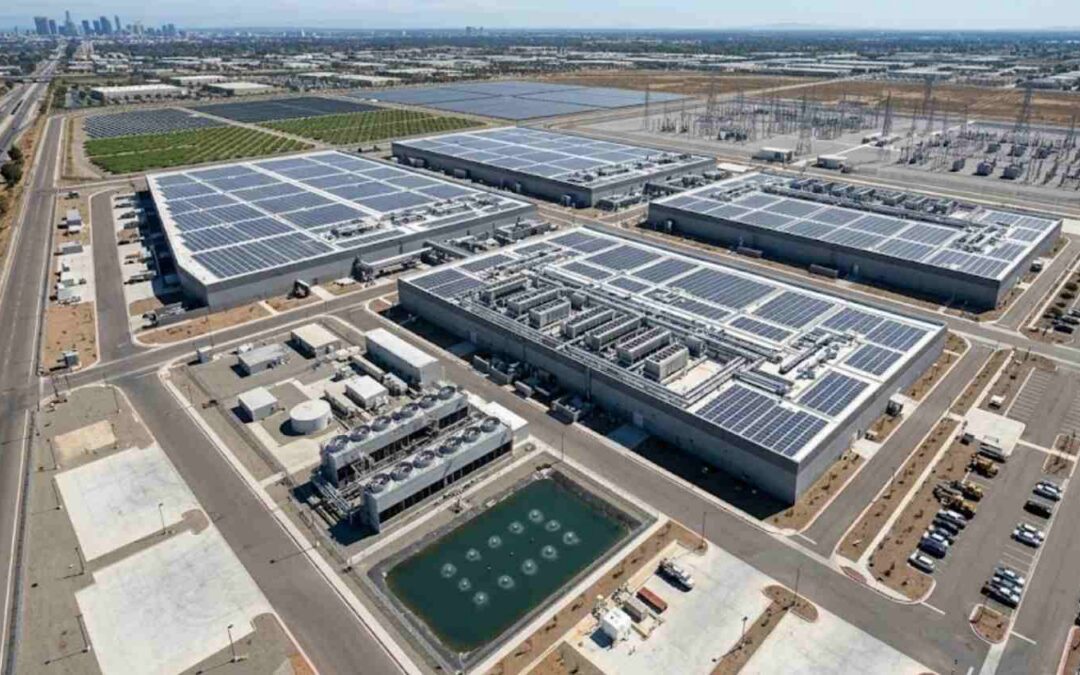
Power has become one of the scarcest inputs in AI infrastructure, often ahead of GPUs, capital, or land. Connecting a new data center to the grid now routinely takes years, and that delay increasingly determines which projects reach energization on schedule and which miss their commercial window entirely.
In practice, this constraint is already reshaping hiring strategies, especially for specialized roles like utility operators involved in grid coordination and interconnection execution. As demand for large-load capacity outpaces the expansion of transmission and distribution systems, grid interconnection timelines have become one of the major factors shaping where and when data centers are built, and which roles are needed to keep those schedules from slipping.
Why Grid Interconnection Became a Defining Constraint for AI Infrastructure
Connecting new capacity to the grid used to be a multi-year process that most planners could forecast with some confidence. In several regions, that window has expanded sharply. The volume of projects waiting in line has outgrown the system built to study them, and demand for large-load data centers has joined an already crowded field.
Interconnection Waits Have Stretched Well Beyond Historical Norms
Much of the public attention focuses on the generation interconnection queue, and the scale is striking. Lawrence Berkeley National Laboratory’s Queued Up report captures how far the backlog has grown:
- Roughly 2,600 GW of generation and storage capacity was seeking transmission access at the end of 2023, more than twice the size of the existing US generating fleet.
- Over 95% of that capacity is solar, wind, and battery storage rather than load.
- Active queue volume has since eased somewhat as projects withdraw, but the backlog remains historically large.
That queue tracks generation projects, not data center service connections. The two processes overlap but are not identical. Large-load customers such as hyperscale data centers increasingly face similar capacity and study bottlenecks, which is why developers watch these numbers closely even though the headline figures describe generators.
The timeline trend tells the same story:
- Median queue time has roughly doubled, moving from under two years for projects built in the mid-2000s to over four years for those built in 2018 through 2024, according to LBNL.
- Regional figures vary widely by utility, voltage level, and study requirements, so no single number fits every market.
- In many major US data center markets, developers now report power delivery timelines measured in years rather than months.
The Build-vs-Grid Timing Mismatch Is Structural
You can build a data center in 18 to 36 months. The grid infrastructure that powers it often takes far longer to study, approve, and construct. That gap is not a scheduling error you can fix with better project management. It is built into how the two systems operate.
The cost of that mismatch is real. A single year of delay can mean losing a hyperscale tenant or missing an AI model generation cycle, in which the hardware you planned around is outdated by the time power arrives. For many projects, data center time-to-power now drives the development schedule from the day an application is filed.
For a closer look at the roles that keep projects on schedule, read our companion guide on who to hire when data center power delivery and energization keep slipping.
Where Data Center Interconnection Timelines Break—and Who Keeps Them Moving
Much of data center power delivery hiring maps to a specific function. When a schedule slips, it usually does so at one of three stages, and each stage has a role that either keeps it moving or lets it stall. The right specialists cannot remove structural grid constraints, but they can reduce avoidable delays and improve the odds of staying on schedule.
The Application and Study Stage
Two functions set how fast your application clears review. Power systems engineers design the electrical distribution system and produce the technical package that becomes the foundation of your interconnection application. They model load profiles and size equipment to spec. Interconnection specialists then produce the load-flow, short-circuit, and voltage-impact studies utilities require to evaluate that application. Depending on the firm, those study responsibilities fall to interconnection engineers, transmission planning engineers, or external consulting engineers.
Design competence and study documentation are different skills, and conflating them is a common, costly error. A licensed PE can design a system well and still be unable to produce utility-standard interconnection studies. Errors at this stage force revisions, and each revision adds weeks to a timeline that has none to spare. Many developers do not see how wide that gap runs until they are already in the queue.
The Approval and Permitting Stage
Once the documentation is in order, people manage it throughout the process. Utility coordinators maintain the relationship with the utility’s interconnection team. Their value is risk reduction: maintaining communication with utility stakeholders, identifying emerging issues early, and helping projects move through established review processes with fewer surprises. They work within the utility’s formal processes rather than around them, and that fluency takes years to build. The experience our utility construction executive recruiters look for separates a coordinator who prevents missteps that cost time from one who learns the process on your project.
Permitting managers own a separate track. Zoning, environmental reviews, and utility easements each run on independent timelines, and a project that clears interconnection can still stall for months on a permit no one is actively driving. The utility coordinator owns the interconnection relationship; the permitting manager owns approvals across multiple agencies and jurisdictions.
The Energization Stage
The final milestone is energization itself. Commissioning engineers are responsible for testing, verification, and sign-off between construction completion and live operation. They run pre-energization checks, confirm systems perform to spec under load, and produce the documentation authorities require before commercial operation.
This is where a clean project still loses time. A data center can clear every grid and permitting hurdle and lose weeks at the finish if commissioning is understaffed or handed to a generalist who has never worked mission-critical electrical systems.
The Strategic Hires Emerging for End-to-End Power Delivery
Individual contributors hold each stage open. Two leadership roles increasingly own the entire path, and they are appearing on org charts that did not have them a few years ago.
Transmission and Interconnection Directors
These directors lead the strategy and execution required to secure power for large-load developments. They own interconnection applications, run utility negotiations, and structure the agreements that reserve capacity and fund the network upgrades a project depends on.
Their job is to keep each project on a predictable path to energization, to escalate risks early, and to build an operating structure that allows several projects to advance in parallel rather than one at a time. What this role alone entails is execution at the project level: turning an approved strategy into signed interconnection agreements and a firm energization date for each site.
Energy Strategy Directors
Energy strategy directors architect long-term power strategies across portfolios that must remain resilient, flexible, and grid-integrated. Their work shapes interconnection timelines, flexibility revenue pathways, and decarbonization plans at once. In power-constrained regions, this role helps unlock the next wave of growth.
What this role owns exclusively is the portfolio-level decision that precedes any single application: where to build, which markets to enter, and what mix of grid power, on-site generation, and storage the company commits to before a project-level director begins execution. Some recruiters increasingly describe these leaders as “energy diplomats” because they bridge engineering, utility relations, permitting, and commercial strategy in a single seat.
When On-Site Power Enters the Plan, the Roster Changes
Some developers stop waiting on the grid entirely and bring generation on-site. That decision does not sit outside the timeline conversation. It adds roles to the same hiring plan, which is why it belongs alongside the interconnection functions rather than apart from them.
Behind-the-meter generation, power produced on-site rather than drawn through the utility connection, can reach commissioning faster than a congested grid interconnection in some markets. It introduces its own regulatory, environmental, fuel-supply, and capital-cost challenges, so most developers treat it as a hedge against long utility timelines rather than a clean shortcut. Operators that once passively consumed energy now co-invest in infrastructure and engage directly in planning and delivering power.
That hedge only works with the right people behind it. On-site generation specialists design distributed systems that can run independently during delivery gaps, covering generator integration, microgrid architecture, fuel logistics, and automatic switching controls. Battery energy storage (BESS) integration specialists handle the storage side, where system architecture, dispatch logic, and distributed generation interconnection rules require a skill set generator experts do not carry. These roles used to sit in backup planning. On AI-scale projects, they often move closer to core infrastructure.
Why Are Data Center Power Delivery Roles Hard to Fill?
The people with the right background are usually working, often mid-project at a utility, an EPC firm, or a hyperscaler. That is the core reason these searches stall.
The Right Candidates Are Mid-Project, Not on Job Boards
They rarely post résumés or answer keyword searches. Reaching them takes relationships built across decades of work in energy and infrastructure, not a job-board search.
Market pressure makes it harder still:
- Northern Virginia, the largest data center concentration in the world, runs interconnection queues stretching past 2030 for new applicants.
- Large power transformers have two- to four-year lead times, stacking equipment scarcity on top of grid delays.
- Competing offers reach qualified candidates from several operators simultaneously, narrowing the window between first contact and acceptance.
An empty seat in power delivery feeds straight into your energization date. Settling for a second-choice candidate in a role this specialized carries its own downstream risk. Our analysis of how to overcome talent shortages in the utility sector explains why this pool remains so narrow.
Commercial Construction Credentials Alone Don’t Transfer
Standard searches surface candidates with strong commercial construction backgrounds: hospitals, corporate campuses, manufacturing facilities. That experience has real value on a data center project. It does not transfer to utility-side coordination or grid study work without specific additional background.
The issue is precision, not general competence. Placing a candidate who lacks utility-specific fluency into a role that requires it creates a gap that rarely closes on the job. As distributed generation becomes standard, smart grid expansion further raises the bar. When you evaluate candidates, confirm three things:
- What they built and in what sector context
- Which utilities and regulatory systems they have worked within
- Which interconnection applications they have shepherded through review
Assessing Your Power Delivery Talent Gaps
Before you start a search, map critical project functions against your timeline. The functions that protect your energization date are not all needed at once, and hiring them in the wrong order leaves gaps at the points where delay costs the most.
A practical sequence looks like this:
- Pre-application: power systems engineers and interconnection specialists come first, because design and study quality set how cleanly your application enters review.
- In-queue: utility coordinators and permitting managers matter most once your application and parallel approvals are moving, when steady management keeps reviews, approvals, and utility communications moving.
- Pre-energization: commissioning engineers ensure that testing, documentation, and turnover activities align with the planned startup sequence.
Watch for warning signs that a staffing gap is forming: interconnection studies coming back with repeated requests for revision, permits sitting without an owner, or a commissioning plan that still has no named lead as construction nears completion. Each is a signal that a seat needs to be filled before it becomes a delay.
Frequently Asked Questions
How long does grid interconnection take for a data center?
Timelines vary widely by utility, voltage level, and study requirements, so no single number fits every market. The trend, though, is clear. Median time in the generation interconnection queue has roughly doubled over the past two decades, and in many major US data center markets developers now report power delivery measured in years rather than months. Planning around the lower end of that range is risky when your build cycle runs only 18 to 36 months.
What roles are needed for data center grid interconnection?
The core functions span three stages. Power systems engineers and interconnection specialists prepare the application and required studies. Utility coordinators and permitting managers move it through utility and regulatory review. Commissioning engineers handle testing and sign-off before energization. On larger programs, transmission and interconnection directors and energy strategy directors own the end-to-end path. On-site generation and BESS integration specialists become central when developers add behind-the-meter power.
Why are these data center power roles so hard to hire?
The qualified pool is small and mostly working mid-project at utilities, EPC firms, and hyperscalers, so candidates rarely surface through job boards. Equipment scarcity and queues stretching past 2030 in markets like Northern Virginia add pressure, and strong candidates often hold competing offers. A commercial construction background alone does not transfer without utility-specific coordination and grid study experience.
Fill The Seats That Decide Your Energization Date
Power delivery timelines in 2026 leave little margin. Time lost while a critical role sits open tends to translate directly into time added to your energization schedule, and projects often break at the point where they reach a key approval without the right person in the seat.
The Newport Group has placed technical and senior management talent for growth industries across North America since 1995. We work with data center developers, hyperscalers, and infrastructure operators throughout the full power delivery hiring cycle, placing roles such as transmission and interconnection directors, power systems engineers, and commissioning leads with utilities, EPC firms, and hyperscale operators. Our executive recruiters draw on deep networks across energy, construction, and infrastructure, supported by recruiters with more than 50 cumulative years in these sectors.
Our SMART Search Process™ (Specify, Market, Assess, Refer, Track) is a collaborative, comprehensive program designed to surface candidates with the exact mission-critical experience these roles demand. We do not post and wait. We:
- Identify candidates already working in these roles
- Qualify them against your technical and operational requirements
- Deliver a shortlist of professionals who have done this work before
If your data center project faces grid delays and you need the right people in the room, contact The Newport Group at (760) 274-0100 to start the conversation. We work with candidates as well, so if you are a power systems engineer, interconnection specialist, utility coordinator, on-site generation specialist, or BESS integration expert looking for your next opportunity, reach out to explore what is available.